

By Charles “Teddy” Galloway
I have spent years working at the intersection of national security, nonprofit program development, and community-level preparedness planning. My work focuses on the practical question that too few communities are asking right now: if the systems we depend on stop working, what do we do?
I am from a small city called Frederick, Maryland, and I am writing this because I believe the answer to that question starts with food. And I believe the framework I am going to lay out here applies to every community in America, not just mine.
Frederick, Maryland is a place most people outside the mid-Atlantic have never heard of. It sits about 50 miles northwest of Washington, D.C., close enough to feel the economic and political gravity of the capital, far enough to remain agricultural and rural in character. Frederick County has over 1,300 farms covering nearly half the county’s land. It has farmers markets, CSA programs, and a Food Council that connects to state and federal agricultural networks. Farms like Catoctin Mountain Orchard have been supplying local schools since 2011. Operations like Moon Valley Farm represent the kind of diversified, community-connected agriculture that most counties would envy. It looks, from the outside, like a community that has food figured out.
We are not ready. And neither is yours.
Those same farms are now facing 20 to 40% fertilizer cost increases, the loss of nearly $6 million in school food purchasing, and an infrastructure project (the Maryland Piedmont Reliability Project, a 67-mile transmission line) that threatens 409 properties, many of them agricultural. The pressures are compounding from every direction simultaneously.
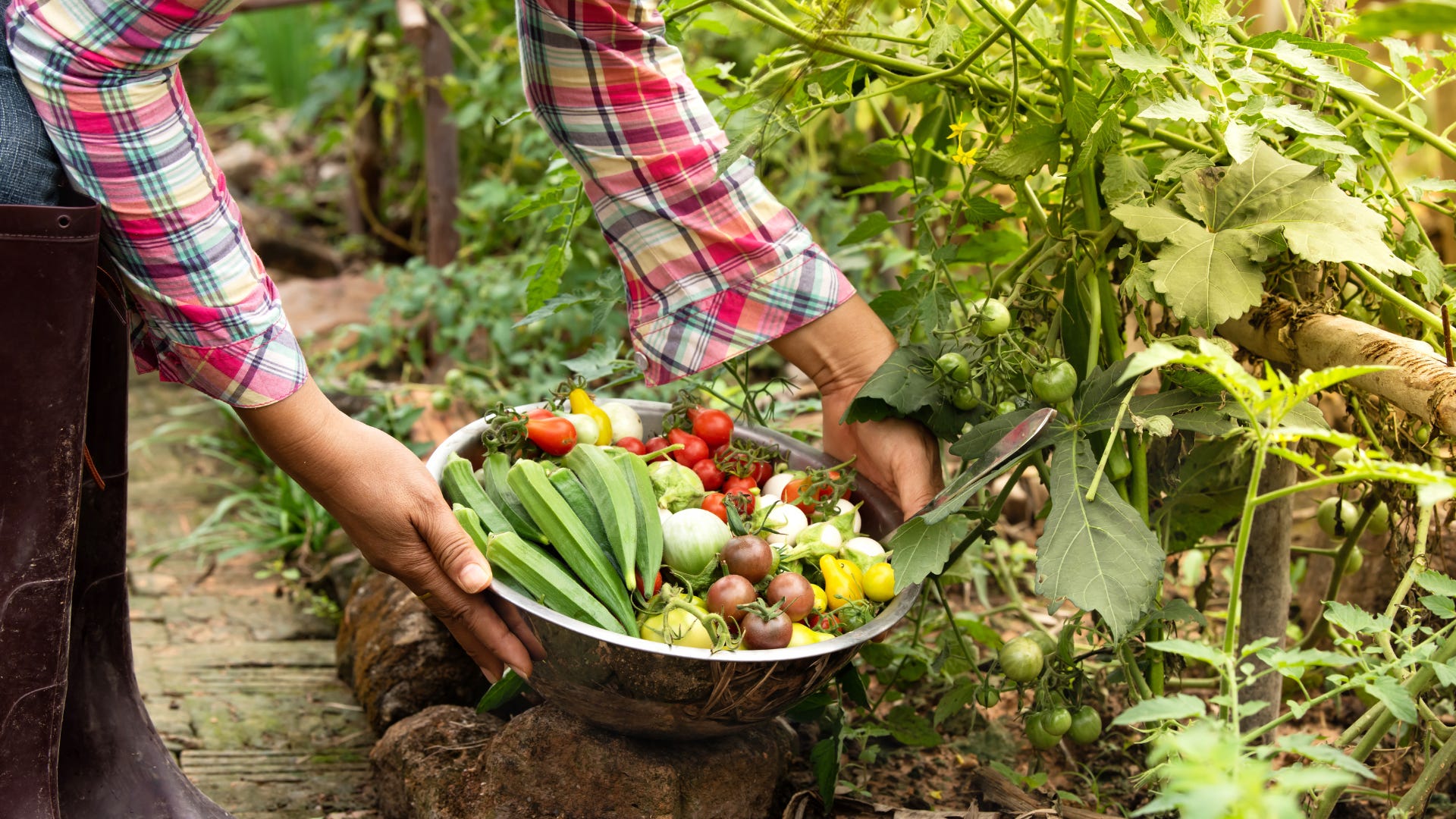
I want to highlight some principles in this piece, that are not specific to Frederick, but for our general communities’ resilience. These are transferable to any county, any town, any region that grows food, eats food, or depends on supply chains to move food from where it is produced to where it is consumed. That covers everywhere. The details will differ, the partners will have different names, the growing zones will vary, but the architecture of community food resilience is universal. If your community has land, kitchens, and people willing to work, you have everything you need to start.
We need local supply chains and community coordination in order to minimize impacts related to food insecurity.
The World We Are Living In Right Now
I am not going to pretend this is a theoretical exercise. It is April 2026, and the global situation is deteriorating on multiple fronts simultaneously.
The United States is engaged in active military conflict in the Middle East. The Strait of Hormuz, the narrow waterway through which roughly 20% of the world’s oil supply moves, is under direct pressure from the Iran-Israel escalation. Iran responded by effectively closing the Strait of Hormuz to commercial shipping. The numbers are staggering: tanker traffic through the strait dropped approximately 70%, from 138 vessels per day to as few as three. Oil prices are climbing. When oil prices climb, everything that moves by truck, train, or ship gets more expensive. That includes food. The average American meal travels 1,500 miles before it reaches a plate. Every one of those miles just got more costly.
In the recent Substack - “The Double Squeeze,” The Porch Light, the author explain this perfectly a “double squeeze” where natural gas prices spike, driving up fertilizer production costs, while energy disruption triggers cascading budget impacts across every sector of the economy. The fertilizer impact is already measurable. Nitrogen-based fertilizer prices have increased 20 to 40% since late February 2026.
The global fertilizer market, already fractured by the Russia-Ukraine crisis that tripled prices in 2022, is experiencing a second supply shock. This is on top of the 2022 Russia-Ukraine crisis that tripled fertilizer prices and pushed input costs to nearly 45% of operating expenses for American wheat and corn farms. Fertilizer is not reaching American farms at the volumes or prices that make industrial agriculture sustainable. Farmers who were already operating on margins thinner than most people realize are now making planting decisions based on what they can afford, not what the land can produce. That changes what shows up in your grocery store six months from now.
The USDA now projects the fewest wheat acres planted in over a century. That is not a forecast of potential trouble. That is a measurement of trouble that has already arrived. Farmers across the country are making planting decisions right now based on what they can afford, not what the land can produce or what their communities need. That changes what shows up in your grocery store six months from now.
The American economy is contracting. Layoffs are accelerating. Consumer confidence is falling. The population of ALICE households (Asset Limited, Income Constrained, Employed) is growing, which is a polite way of saying that more families every week are one car repair, one medical bill, or one missed paycheck away from not being able to feed themselves. Food bank demand is rising. It will continue to rise.
Housing instability is compounding all of it. When families lose income, housing is the first crisis. Food becomes the flexible expense, the bill that can be skipped because hunger does not send an eviction notice. Families in housing crisis cut food first. That is not a statistic. That is what happens in every economic downturn, in every community, without exception.
These pressures are not unique to America. They are global. But the response has to be local, because the systems that are failing are the large-scale, centralized, supply-chain-dependent systems that were designed for stability, not disruption. When those systems strain, the communities that survive are the ones that can feed themselves.
The Assumption We Can No Longer Make
For most of modern American history, communities have been able to assume that in a crisis, the federal government, the state government, or some institutional safety net would step in and provide. FEMA would arrive. SNAP benefits would expand. Emergency food distribution would deploy through established channels. The system would hold because it always had.
That assumption is no longer safe.
The One Big Beautiful Bill Act, signed July 4, 2025, eliminated SNAP-Ed (the nutrition education component of food assistance that reached 424,000 Marylanders alone), cut $660 million in Local Food for Schools funding, and initiated $186 billion in federal SNAP cuts projected through 2034. The USDA terminated its Household Food Security Reports, the primary instrument for measuring how many Americans are going hungry. We are not just losing the safety net. We are losing the ability to measure how many people are falling through it.
At the state level, Maryland faces $457.5 million in additional costs just to maintain current service levels in the wake of federal cuts. In Frederick County specifically, the school system lost nearly $6 million annually in local food purchasing capacity. In the 2024-2025 school year, 18,000 Frederick County Public Schools students, 32% of total enrollment, qualified for free or reduced meals. The federal infrastructure that supported those meals is contracting while the number of families who need them is growing.
This is a planning reality.
The velocity of change in the global economy, in geopolitics, in energy markets, and in domestic policy is faster than institutional response systems were designed to handle. Federal agencies are managing multiple simultaneous pressures. State budgets are constrained. The organizations that have historically served as the last line of defense against hunger, food banks, faith-based pantries, community meal programs, are already operating at or near capacity before the current pressures have fully arrived.
The point is not that government will fail. It may not. The point is that responsible planning does not depend on a single assumption about who will help. Responsible planning builds capacity at the community level so that whether or not outside support arrives, people eat.
And here is the thing: even if none of the worst-case scenarios materialize, even if the Middle East de-escalates, the economy stabilizes, and fertilizer flows resume, a community that has built its own food resilience infrastructure is better off than one that has not.
Community gardens produce food. Community kitchens feed people. Trained residents have skills. Coordination networks function. These are not wasted investments in the event that the crisis passes. They are improvements to community health, nutrition, social connection, and economic resilience that pay dividends regardless of what happens globally.
The best time to prepare was years ago. The second best time is now.

The Human Element: Purpose, Not Just Survival
Before I get into the framework, I want to address something that the typical emergency planning document ignores: the human cost of feeling useless in a crisis.
Right now, across this country, there are millions of capable, healthy, strong people who have no work, or whose work has been reduced, or who are watching the trajectory of the economy and feeling a growing sense of dread. They watch the news. They see the conflicts, the layoffs, the price increases, the instability. And they feel powerless, because the problems appear too large for any one person to affect.
That feeling is as dangerous as the food insecurity itself. People without purpose withdraw. They disengage from their communities. They stop believing their effort matters. Social isolation increases. Mental health deteriorates. Civic participation declines. Communities fragment precisely when they most need to come together.
A community food resilience plan is not just a food plan. It is a purpose plan. Every component of the framework I am about to describe puts people to work doing something tangible, visible, and meaningful:
· People get outside. They put their hands in soil. They feel the sun. For someone who has been sitting at home scrolling through bad news for weeks, the simple act of building a raised bed or harvesting greens is a mental health intervention.
· People eat better. Food grown fifty feet from where you stand tastes different than food that traveled 1,500 miles in a refrigerated truck. When communities grow food, communities eat well.
· People meet their neighbors. A community garden is a social infrastructure project as much as a food project. People who garden together talk, cooperate, share knowledge, and build the kind of trust that does not exist between strangers. In a time when social isolation is epidemic, that trust is worth as much as the tomatoes.
· People discover they can do something. The shift from watching a crisis to working through it changes a person’s relationship to their community and their future. Participants become stakeholders. Spectators become builders. That transformation is the real product of this work.
This plan creates pathways for everyone: paid positions for those who need income (if required/needed), stipended roles for those who need structure (interns and fellows), volunteer opportunities for those who need purpose. When you go to the recently unemployed person and say, “We need you. Your community needs your hands, your time, and your energy, and here is exactly where you can put it,” you are offering something more valuable than a meal. You are offering relevance.
A Framework for Community Food Resilience
The framework that follows is organized around six pillars. Each one addresses a specific vulnerability. Together, they create a system where food is grown locally, preserved for storage, prepared in community kitchens, distributed to where it is needed, protected against disruption, and coordinated by the people who live there.
These pillars are not proprietary. They are derived from proven models operating in cities and counties around the world, from Belo Horizonte, Brazil (which feeds 800,000 people annually on less than 2% of its municipal budget) to Lancaster, Pennsylvania (which provides three free meals daily, seven days a week, through multi-church coordination) to Havana, Cuba (which converted an entire city to urban agriculture after losing 90% of its fertilizer imports overnight). The models work. The question is whether your community will build one before it needs one.
Pillar 1: Food Production Education
The most fundamental vulnerability in any modern community is that very few residents know how to grow food. We consume food. We purchase food. We do not produce it. In a stable economy with functioning supply chains, that is fine. In an unstable economy with disrupted supply chains, it is a critical weakness.
Food production education means teaching residents at every level, from the person who has never grown anything to the experienced gardener who wants to scale up, the skills required to produce food in their specific climate and soil conditions. This includes raised bed construction, composting, soil building, seed starting, season extension (hoop houses, cold frames, row covers), and critically, food preservation: canning, pickling, drying, fermenting, and root cellaring.
The preservation piece is often overlooked, and it should not be. Growing food in the summer is only useful if you can store it for the winter. Communities that grow but do not preserve are communities that are food-secure for four months and vulnerable for eight.
The delivery model matters. Education has to be free, accessible, and immediate. Weekly workshops in community spaces. Demonstration gardens where people can see what works. Online modules for people who cannot attend in person. “Train the trainer” models where the first cohort of graduates becomes the next round of instructors, so the system scales without needing more staff or more budget.
Most communities already have assets for this. Agricultural extension programs, master gardener networks, community colleges with horticulture departments, local farms willing to host field days. The infrastructure for education frequently exists. What is missing is coordination and urgency.
Pillar 2: Community Grow Networks
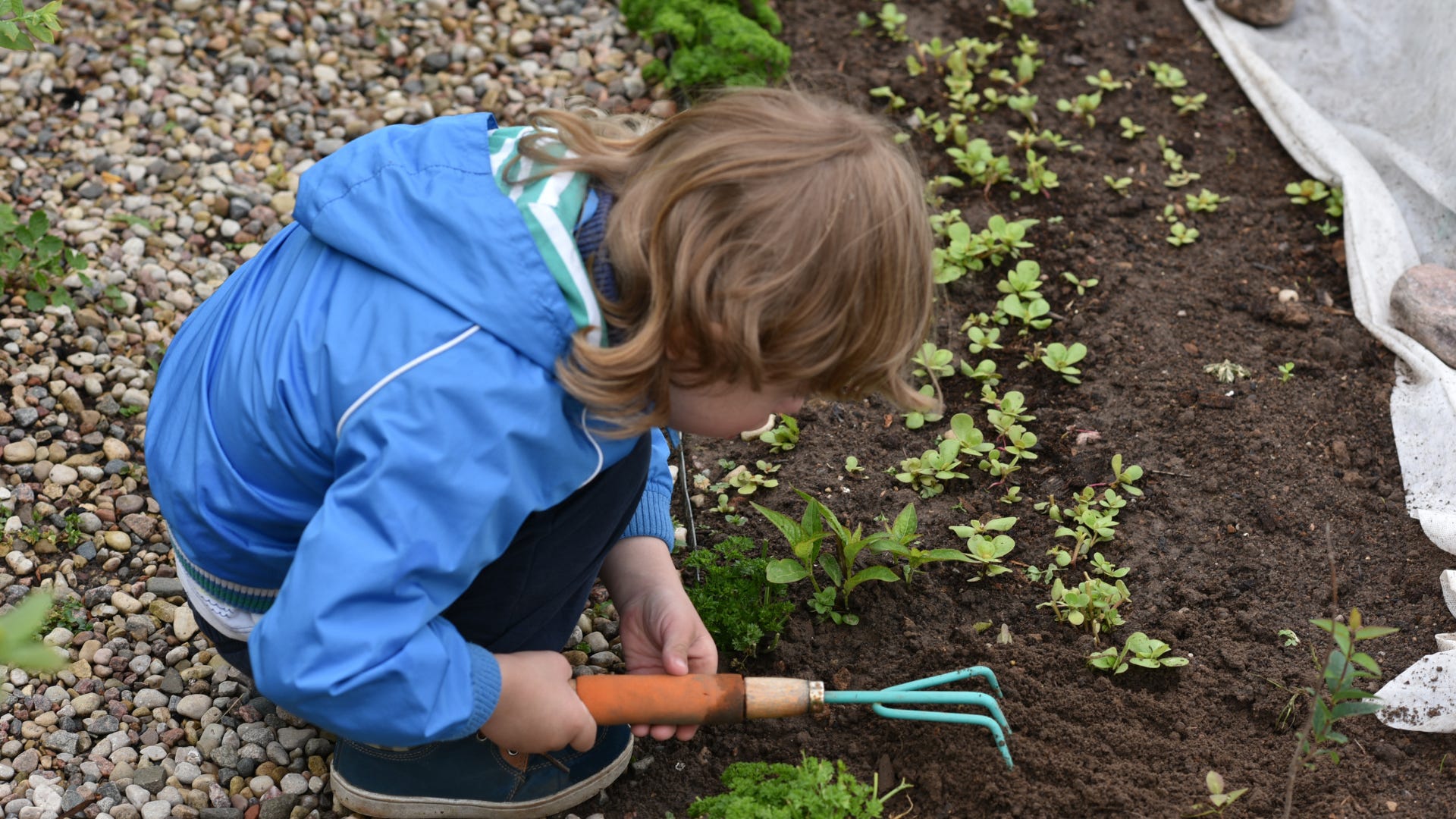
A community grow network is a coordinated system of food production sites at multiple scales: household gardens (a raised bed in a backyard or on a balcony), community gardens (shared plots on donated or public land), and institutional growing sites (larger parcels at schools, churches, municipal properties, or farms).
The key word is “network.” Isolated gardens are valuable but limited. A network of gardens connected through a coordination system can share surplus, distribute seeds and starts, rotate crops across sites, and aggregate harvests for community kitchens and food distribution. The difference between fifty independent gardens and a network of fifty gardens is the difference between a hobby and infrastructure.
Site identification can be systematic. Food desert maps (available free from the USDA), soil quality data, water access, sunlight exposure, population density, and proximity to existing food programs can all inform where new growing sites will have the most impact. Start with the neighborhoods that need it most and have the least access to fresh food.
Scale matters, but do not let scale paralyze you. A household raised bed kit (4x8 feet of growing space, soil, seeds, basic tools) can be built for a few hundred dollars and produce meaningful food for a family within weeks. Community plots require more coordination but produce proportionally more. Institutional sites require the most setup but anchor the network and produce at volumes that supply kitchens and food banks.
Season extension is non-negotiable in most climates. A simple hoop house or cold frame, built for a few hundred dollars, can add two to three months to a growing season. In a crisis scenario, those additional months of production capacity could be the difference between a community that feeds itself through winter and one that does not.
Pillar 3: Community Kitchen Networks
Food production is half the equation. Food preparation is the other half. A community kitchen network is a coordinated system of approved kitchen sites, typically at churches, community centers, schools, business facilities, fire halls, and other established locations, operating on a rotating schedule to provide regular meal coverage.
The model that proves this works most clearly is Lancaster, Pennsylvania, where different congregations host meals on different days of the week, achieving three free meals daily, seven days a week, across the city. No massive central facility. No million-dollar construction project. Just coordination among existing kitchens that were already sitting empty most of the week.
Every community has underutilized kitchen infrastructure. Churches have commercial kitchens that operate on Sunday mornings and sit dormant the rest of the week. Restaurants and catering companies have capacity during off-hours. Community centers have kitchens built to code that are used a few times a month. Schools have cafeteria kitchens that shut down at 2 PM and all summer.
The barriers are not physical. They are organizational: scheduling, food safety compliance, insurance, volunteer coordination, and supply chain logistics. A community kitchen network solves these by providing the coordinating layer that individual sites cannot provide on their own.
All kitchen sites must meet local health department standards. This is non-negotiable. Community food resilience built on food safety shortcuts will collapse the first time someone gets sick. County-approved, health-department-inspected, properly insured kitchen sites staffed by food-safety-trained volunteers. That is the standard. It is achievable. It just requires someone to organize it.
Food preservation can and should happen at these kitchen sites as well. Community canning days, where residents bring garden surplus and leave with shelf-stable jars, are a proven model for converting summer abundance into winter security. The kitchen infrastructure already exists. Use it for more than daily meals.
Pillar 4: Food Flow Coordination
Growing food and cooking food are necessary but not sufficient. The food has to get from where it is to where it is needed. Food flow coordination is the logistics layer that connects every node in the system: farms, gardens, food rescue operations (surplus from restaurants, grocers, and farms), community kitchens, food banks, pantries, community fridges, mobile distribution points, and individual households.
Without coordination, surplus rots in one location while people go hungry in another. A farm in the northern part of a county has produce it cannot sell, but there is no efficient pathway to get that produce to a kitchen twenty miles south. A community garden has a bumper crop of tomatoes, but the nearest food bank does not know about it. A restaurant closes for the night with fifty pounds of usable food that goes into the dumpster because no one came to pick it up.
Coordination technology exists and much of it is free. Feeding America’s MealConnect platform connects food donors with nonprofits nationally. The Open Food Network is a free, open-source platform for local food hub management. Food Rescue US matches surplus with need using volunteer drivers. These tools are not hypothetical. They are deployed in thousands of communities already.
But technology is only the tool. The real coordination is human: someone who knows which gardens are producing, which kitchens need supply, which food banks are running low, and which volunteer drivers are available. In small communities, that coordination can start with a phone, a spreadsheet, and a group chat. Scale the technology as the network grows.
Food flow also includes the locations where people access food. Not everyone can come to a central distribution point. Community fridges (publicly accessible refrigerators stocked daily and available 24/7) extend the reach of the network into neighborhoods that formal programs do not cover. Mobile distribution brings food to rural areas where transportation is a barrier. Meeting people where they are, rather than requiring them to come to you, is the difference between a food program that serves its community and one that serves only the people who can get to its front door.
Pillar 5: Emergency Preparedness Triggers
Everything described above operates in what emergency planners call “steady state,” the normal operating condition where the system runs, serves people, and builds capacity. But the entire reason for building this system is to be ready when steady state breaks down.
An emergency preparedness framework defines what happens when demand surges beyond normal capacity. The simplest model uses three tiers:
Green (Steady State): Community gardens producing. Kitchens operating on schedule. Food flow coordination active. Volunteers engaged. Training programs running. The system is building capacity and serving the current need.
Yellow (Elevated Need): Demand increases 25 to 50% above baseline. Trigger indicators include rising food bank requests, increasing unemployment claims, food price spikes above a defined threshold, or supply chain disruption reports.
Response: expand kitchen hours, activate additional kitchen sites, increase food rescue pickups, mobilize reserve volunteers, accelerate garden production where possible.
Red (Emergency): Demand surges 50% or more above baseline. Trigger indicators include sustained supply chain disruption, regional disaster, mass unemployment event, or institutional food program failure. Response: all kitchen sites at maximum capacity, emergency food distribution activated, mutual aid agreements with neighboring communities activated, coordination with county or regional emergency management.
The triggers should be quantitative where possible: specific food price index thresholds, unemployment rate thresholds, food bank demand metrics. This removes the guesswork and the politics from activation decisions. When the numbers hit the threshold, the response activates.
Mutual aid agreements with neighboring communities are essential. No community is an island. The county next door may have surplus when you have shortage, or vice versa. Pre-negotiated agreements that define what resources are shared, how, and under what conditions mean that when the crisis hits, the phone calls have already been made and the frameworks are already in place.
After every activation, conduct an after-action review. What worked. What did not. What to change. The system gets better every time it is tested.
Pillar 6: Community Coordination & Volunteer Infrastructure
This is the pillar that holds all the others together. Every garden needs someone to organize it. Every kitchen needs a schedule. Every food rescue run needs a driver. Every workshop needs an instructor. Every tier escalation needs someone to make the call. Without a coordination infrastructure and a volunteer base to staff it, the other five pillars are just ideas on paper.
Community coordination means:
A coordinating body. Someone has to own the overall system. This can be a nonprofit, a government office, a coalition, or a task force, but someone has to be responsible for ensuring that the gardens, kitchens, food flow, training, and emergency preparedness components are working together rather than operating in parallel silos. Coordination is not glamorous work. It is scheduling, communication, conflict resolution, data tracking, and logistics. It is the work that makes everything else possible.
A volunteer recruitment and management system. Community food resilience is labor-intensive. It requires people: gardeners, cooks, drivers, organizers, trainers, fridge stockers, data entry workers, event coordinators. Most of these roles can be filled by volunteers. But volunteers need to be recruited, trained, scheduled, supported, recognized, and retained. That does not happen spontaneously. It requires a system.
Volunteer roles should be clearly defined, with specific time commitments and skill requirements: - Garden coordinator: manages a community garden site - Kitchen volunteer: food preparation at a community kitchen - Kitchen lead: manages a kitchen shift, holds food safety certification - Food rescue driver: picks up surplus food and delivers to kitchens or distribution points - Community fridge stocker: daily restocking and temperature monitoring - Distribution volunteer: staffs food distribution events - Workshop instructor: teaches food production or preservation classes - Mobile kitchen crew: operates mobile kitchen deployments in underserved areas - Coordination assistant: data entry, scheduling, communications support
Pathways from volunteer to leader. The person who shows up to build a raised bed on a Saturday morning may be the person who runs a garden site six months later. Design the volunteer experience as a progression: orientation, skill development, increasing responsibility, leadership roles. This is how the system scales without needing proportionally more paid staff. It is also how the system survives leadership transitions, funding fluctuations, and organizational changes. When the knowledge and capability are distributed across hundreds of community members rather than concentrated in a few staff positions, the system is resilient in the same way the food supply it protects is resilient: decentralized, redundant, and rooted in the people who depend on it.
Outreach to those who need it most. Do not wait for volunteers to find you. Go to the unemployment office. Go to the community college. Go to the veterans’ organizations, the recovery programs, the churches, the civic clubs. Go to the neighborhoods where people are sitting at home and say: we need you. Bring a sign-up sheet and a date for the first workday. Make it easy to say yes.
Communication infrastructure. The coordination layer needs communication tools that work for non-technical volunteers. Group messaging for real-time coordination. A shared calendar for kitchen schedules and garden workdays. A simple directory so everyone knows who to call. Start with whatever people already use (text messages, phone calls, a group chat) and formalize as the network grows.
The Proof: This Works
None of this is theoretical. Communities around the world have built exactly these systems, often under far worse conditions than what American communities currently face.
Belo Horizonte, Brazil (population 2.5 million) declared food a right of citizenship in 1993 and built 20 interconnected programs: subsidized restaurants, fixed-price produce stands, over 100 community gardens, food banks, and nutrition education. The entire system costs less than 2% of the city budget, roughly one penny per resident per day. Child mortality dropped 60%. Child malnutrition hospitalizations dropped 75%. 800,000 citizens interact with the programs annually.
Cuba lost 90% of its fertilizer and pesticide imports overnight when the Soviet Union collapsed in 1991. Average citizens lost 30 pounds. The government responded by granting land-use rights for urban farming and training citizens in organic agriculture. Within a decade, Havana had 8,000 urban farms producing 50 to 80% of the city’s fruits and vegetables within city limits, employing 44,000 workers. The farms survived the crisis that created them and still operate today.
Lancaster, Pennsylvania (population 60,000) coordinates meals across multiple churches so that three free meals are available every day, seven days a week, across the entire city. No central facility. No massive budget. Just coordination.
Detroit, Michigan built 2,200 urban gardens and farms engaging 20,000 residents on former vacant lots. Grassroots. Decades of incremental growth. The Michigan Urban Farming Initiative distributes over 50,000 pounds of free produce annually from a single three-acre site.
DC Central Kitchen in Washington, D.C. prepares 17,000 meals per day from a single facility, combining food rescue, culinary job training (89% placement rate), and distribution to schools, shelters, and nonprofits. It has spawned 68 Campus Kitchen chapters at colleges nationwide.
The models exist. The technology exists. The knowledge exists. The only thing missing in most communities is the decision to start.

Start Where You Are
I started this piece by saying I work in Frederick, Maryland. That is where I am hoping my community will help build this system, and I won’t be doing it alone. But the reason I wrote this for a general audience is that everything I described applies wherever you are reading this.
Several of the data points in this piece were drawn from Janie Monier’s analysis of the fertilizer and federal funding crisis hitting Frederick County (“The Double Squeeze,” The Porch Light). Janie serves on the Frederick County Board of Education and sees these impacts firsthand, from the school cafeteria to the family budget. When elected officials, community organizers, and residents are all looking at the same data and reaching the same conclusion, that is not coincidence.
This work takes journalists, farmers, faith leaders, nonprofit organizers, county officials, and ordinary residents pulling in the same direction. No single person or organization can build a food resilience system. But a community that decides to act can build one fast.
If your community has land (and every community does, even if it is just church lawns, school grounds, and vacant lots), you can grow food.
If your community has kitchens (and every community does, in churches, community centers, restaurants, and public buildings), you can feed people.
If your community has people who are out of work, underemployed, or looking for purpose (and right now, every community does), you have the labor force to make it happen.
If your community has someone willing to coordinate (and that might be you, reading this right now), you have the starting point.
You do not need permission from the federal government. You do not need a million-dollar grant. You do not need a three-year strategic plan before you plant the first seed. You need a few people, a patch of ground, a kitchen, and the willingness to start before you feel ready.
The growing season is open. The kitchens are sitting empty. The people are available. The only question is whether your community will organize its resources before the next disruption, or after.
I recommend before.
Charles “Teddy” Galloway is the Founding Executive Director of Frederick Civic Works, a nonprofit building civic infrastructure for community resilience in Frederick County, Maryland. He can be reached at teddy@frederickcivicworks.org.